Historic homes carry a peaceful gravity. They ask us to decrease and listen, to discover the built iron latch, the handmade block, the ripple of antique glass. When you work with these structures, you inherit obligations that surpass weatherproofing and air movement. You end up being a guardian of silhouettes and sightlines, of materials that age with poise, and of regulations written to secure them. No place is this even more apparent than at the roofline, where every addition is laid out versus the skies. Custom-made Smokeshaft Shrouds, carried out with restriction and craft, allow engineers and builders solve modern-day performance needs without breaking the spell of the old elevation.
I have spent years strolling scaffold slabs around cupolas and smokeshafts, tracing cornices with a carpenter's pencil, and negotiating with conservation boards across six states. The most successful tasks share a through line. They do not combat the codes or the past. They absorb them, after that slide fresh performance inside an acquainted profile. Done well, a shroud looks inescapable, like it has constantly belonged.
Reading the Roofline
Before any type of steel is reduced, stand back from the structure and review it. Roof pitch, fenestration rhythm, smokeshaft mass, mortar color, the lead flashings put under rock, also the relationship in between eave depth and dormer cheek width, every one of this tells you what the chimney cap wants to be. A Georgian farmhouse with twin indoor stacks requires a different strategy than a Shingle Design coastal home with an exterior rock chimney that rises a tale over the ridge. On landmarked streets, the shadow's ridge clearance and termination elevation are recommended by code, yet you still have latitude in the expression of the skirt, the return, and the weathering.
Historic commissions usually concentrate on what can be seen from a public method. That becomes your north star. If the back elevation really feels modern, you can put more efficiency there. If the public-facing pile is unyielding in its balance, you value that balance in every joint and rivet line. Great style work right here is half version making, fifty percent diplomacy.
What Codes In fact Ask For
It is simple to misinterpret "historic" standards as an aesthetic verdict, when as a matter of fact the records are specific, almost medical. They will certainly reference smokeshaft discontinuation height about roofing system pitch, spark arrestor mesh measurements, clearance to combustibles, and in some cases even the noticeable ratio between masonry and metal. On top of that you navigate the mechanical code and manufacturer's directions for the flue, the UL listing for caps and displays, and, in wildfire areas, WUI requirements for ember resistance.
Two numbers usually control the massing. First, the 3-2-10 guideline for chimney discontinuation, which still gives a standard for safe draft. Second, local advice that limits any type of new visible steel work to a small portion of the smokeshaft height. That means you typically sink performance functions into a deeper skirt folded up inside the masonry, leaving a more modest parapet above the crown. You additionally mind air flow. Extra-large shrouds appear much safer, however a space that is also cavernous can produce turbulence and backdrafts in particular winds. Proportions matter. Frequently a cap location at least double the flue location, matched with a skirt that maintains a complimentary area going beyond the flue, meets both draw and rain defense. The last aperture style adventures on examination information and work history, not guesswork.
Material Choices that Age Like the House
I have a prejudice birthed of upkeep phone calls. Homes hate blended life expectancies. Put a hostile stainless-steel over soft handmade brick and you court galvanic touches and mismatched patina. Use thin aluminum over a smokeshaft that drops warm and you get oil canning and sound. The very best personalized shadows for historic work support steels that weather handsomely and can be developed with quiet detail.
Copper stays the gold standard. A 16 or 20 ounce copper skirt with a 24 ounce cap will settle into a deep brownish within months, then take years to eco-friendly. If the district disapprove very early brightness, you can preweather it to a mid-brown making use of a store process, never ever a paint that will peel. Lead-coated copper earns points where brilliant steel is banned and the surrounding roof coverings already lug lead hips and valleys. For coastal tasks, 316 stainless, acid-etched for low reflectivity, offers the longevity of stainless without the glare. Where spending plan or architectural weight opposes copper, painted steel with a high-performance fluoropolymer finish functions, offered the color matches the existing flashings and the profile is crisp enough to review as intentional.
Hardware matters more than customers realize. Use stainless rivets and fasteners with neoprene washers housed hidden. Pitch frying pans and solder lines have to be treated as visible workmanship, not rooftop second thoughts. This is the part of the job where a store like Salvo Metal Works earns its track record. When you raise a cap constructed by a skilled producer, the joints feel like fashion jewelry holds. The joints read as great joinery, not practical sheet bend.
Profiles that Disappear in Simple Sight
You get one chance to obtain the shape right. 9 out of ten preservation objections focus on account and reflectivity. The tenth is proportion. For the majority of historic rooflines, a reduced hipped cover with a light bevel and a two-stage drip defeats a tall mansard or gable cap, which risks reading as an add-on. A 1 to 2 inch kick at the drip side returns water far from the stonework face. Under that, a darkness space just deep enough to break the airplane keeps the steel from visually merging with the brick or stone. If your eye maintains gliding off the cap and back to the brickwork, you have actually done your job.
There are exemptions. Tudor smokeshafts with sophisticated shoulders, celebrity plan stacks, and gathered pots want a bolder expression, in some cases with pierced returns. In those instances, you echo the geometry without replicating it. A louvered side, if required, should conceal inside the thickness of the skirt. Vertical slit vents, each no bigger than a mortar joint and prepared with the rhythm of the brick bond, can go away entirely at road range, yet provide totally free location for draft and heat release.
Water: The Silent Opponent Over the Crown
Historic stonework stops working from water more often than fire. I have seen crowns peel in ten years when a motorist rainfall locates a path. The shadow has to fix water without turning the chimney into a sauna. That means a built-in underlayment approach and redundancies. Flashings must step under the crown as far as the brick allows without jeopardizing the mortar bed. A counterflashing reglet cut and loaded with lead woollen does for years, specifically when the steel is worked into the quirks of the block rather than forced level. The cap itself must include a baffle system, not just a flat lid. Two-stage baffles push wind-driven rainfall down right into a guttered hem that expels to the outside. A correctly hemmed side does greater than look tidy. It stiffens the panel, silences the wind, and tosses water out and off the stack face.
One job on a sandstone smokeshaft instructed me a valuable action. Sandstone beverages water and shows discolorations. We set the shroud 3 inches back from the face edge, after that developed a freestanding copper drip with a knife side. At a glimpse you can not see it, but the first tough rainfall showed the factor. The stone below stayed clean, the crown never pooled, and after two seasons the copper had actually patinated right into invisibility.
Venting Technique Without the Eyesore
When the flue is energetic, specifically with modern-day gas devices, the shadow becomes a venting companion. You can not want away exhaust plume paths or crosswinds. Hidden baffles coupled with a spark screen of the right scale, typically between 3/8 and 1/2 inch, equilibrium cinder control with totally free circulation. Stack effect, wind exposure, and the form of close-by structures all element right into whether you get a lazy roll of smoke right at eave elevation or a tidy column that removes the ridge. On high, narrow chimneys, an upright uplift cap with internal vanes may be proper, but in historical areas the external turbine appearance is a nonstarter. Resolve it inside the box. A double-plate cover with chimney effect networks, coupled with a measured cover overhang in between 2 and 4 inches past the skirt, commonly does the trick.
If the structure currently owns a family of roof covering aspects, lean on them. Custom Roofing Vents in the exact same steel and surface can take care of attic room breath, releasing the shroud from doing way too much. Also, customized cupolas that function as a pressure alleviation can clear up complex wind patterns along a lengthy https://salvometalworks.com/product/306/ ridge, aiding smoke lift instead of eddy. The factor is not to make the chimney do every task. It is to compose the roofline so each aspect sustains the others quietly.
Respecting Sightlines, Not Simply Materials
Many code boards bring tape measures and view cones. They base on the sidewalk, mark eye height at 5 feet 6 inches, then examine what is visible against the sky. You do not win these conferences with adjectives. You win them with mockups and gauged sections. I bring a pair of collapsible foam core shrouds, each built to range from our shop drawings. They are awful, yet they telegraph volume and side. Increase them on the scaffold, step down, and invite the next-door neighbors to look. If they can not see it, they quit challenging it.
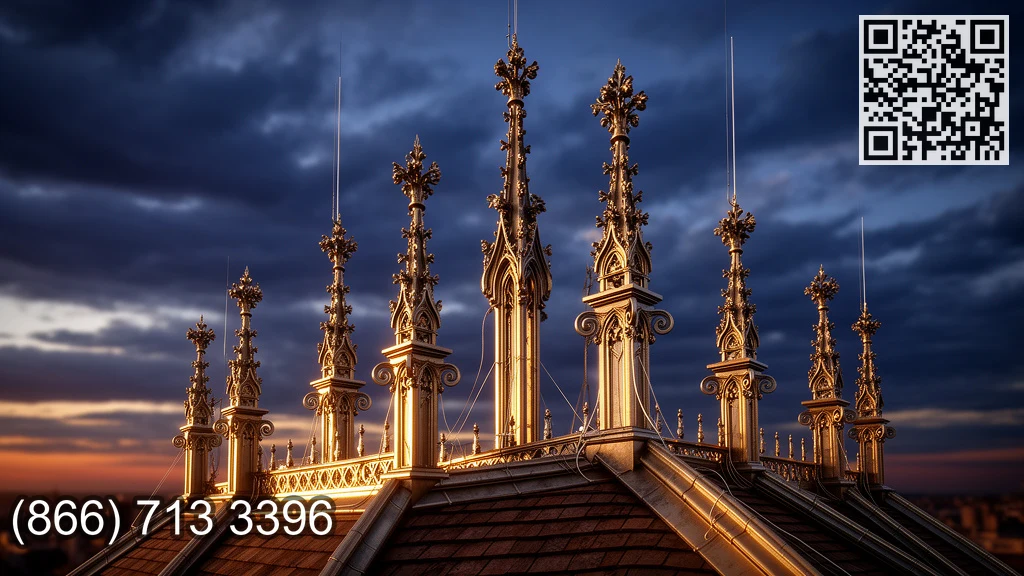
A method that commonly conserves the day is compressing height while preserving cost-free location. Split the cap up and down, expand width within the allowed darkness of the chimney head, then utilize internal bosses to keep the cover rigid without gaining a visible rib over the parapet line. The plan sight can be more daring than the altitude suggests. Octagonal lids soften bespoke copper finial the read without breaching a square base, if and only if the aspects line up with mortar joints and corners. Otherwise they look like hats.
The Craft of Side Work
No aspect of a custom-made shadow leaves more of a trademark than its sides. Hemmed, wired, rolled, or raw, each service reads in a different way from 50 feet. On very early American brick, a fine hem markets age. The edge captures light like the lip of a teacup. On heavy New England granite, a wired edge with a tighter distance holds its very own against the mass of the rock. When we produce at Salvo Metal Works, we sample sides in offcuts of the selected steel and watch them from street distance, not simply in the shop. An account that looks decisive on a bench can glow under June sun.
Soldering deserves its own paragraph. Historical silhouettes endure joints if they are deliberate. I prefer lap seams soldered tight, ground just sufficient to even the airplane, then delegated patinate. Over-grinding makes a weld appear like a scar. Let the metal speak. On copper, a well-soldered lap becomes a hairline that catches dew at dawn and disappears by breakfast.
Case Notes from the Field
A sedimentary rock manse, built in 1912, provided a persistent problem. Twin chimneys flanked a main dormer, all visible from a formal drive. The initial terra-cotta pots had actually fractured, and the proprietor wanted spark control without altering the horizon. We gauged the pot diameters, made Personalized Chimney Shrouds that echoed the pot shoulders, and embedded them inside a low shared lid with a 3 inch overhang. The pots stayed as historical sculpture, the shadow took on the job, and the payment authorized off after a single site go to. Years later on, the copper had gone dark. The shrouds currently really feel initial, like a found drawing in the archive.
On a cedar-shingled seaside home, the wind beat smoke laterally. A conventional cap just made sounds. We collaborated with the mechanical engineer to include very discreet slit vents around the skirt paired with a somewhat crowned lid. The crown establishes a pressure slope that draws plume up, not out. We color-matched the cap to the lead valleys and repeated that coating on Custom Snow Guards along the north slope. The make-up checks out as one family members, calmness under Atlantic weather.
A last example on a brick Italianate rowhouse: limited obstacles meant next-door neighbors could see the smokeshaft from second-floor bay home windows, not just the street. We prepared a second elevation showing the cap as seen from a private angle and readjusted the bevel so the far face went down out of sight because sight. The board appreciated that somebody believed beyond the sidewalk. Tiny gestures purchase trust.
When the Chimney Fulfills Its Company
Integrating the shadow with other roof elements is greater than a convenience. It is exactly how you keep a heritage roofline readable. If the home brings Customized Dormers with a delicate fascia, you grab that fascia deepness in the shroud skirt. If a copper-clad customized cupola rests at middle on the ridge, the shroud's aging and seam tempo should balance, not resemble. Custom-made Finials, where appropriate on turreted corners or cupola peaks, can stabilize the aesthetic weight of a larger smokeshaft cap. Your eye reads the ridge as a conversation. The smokeshaft does not need to shout.
Drainage details provide an additional chance to merge. Custom-made Leader Boxes and downspouts in the exact same steel produce an aesthetic loop that discusses why the steel belongs. I have linked a shadow's drip account to the ogee on a leader head greater than as soon as, and the rep turns disparate items right into a systematic grammar.
Planning and Setting up with Patience
Historic routines appear leisurely till you start counting lead times. Copper sheet in the ideal weight can go on backorder for weeks. Hand-turned finials take days. Mortar repair services need to cure, often a month, before you reduced a reglet for counterflashing. Meanwhile, climate home windows close quickly. The only way to preserve top quality is to secure drawings early and prototype.
Here is a brief list I maintain taped to the inside cover of my site notebook when the job touches a smokeshaft in a historical district:
- Photograph the chimney from all public sightlines, mark eye height, and annotate obstructions. Confirm flue type, home appliance BTUs if any type of, and code recommendations for termination and trigger control. Mock up the cap in foam core or light-gauge sheet and testimonial with stakeholders on site. Coordinate patina approach, edge account, and seam positioning with the wider roof covering metalwork. Dry fit the shadow in the shop, predrill, label, and phase fasteners to decrease rooftop improvisation.
On mount day, work early and complete sides prior to mid-day thermal expansion begins relocating panels around. A well-laid drop cloth and padded ladders secure brick and stone from scratches that no one forgives. If you are setting up Custom-made Snow Guards, established them before the shadow so you are not tipping over fresh work. If you have Personalized Roof Vents to put, validate their totally free location about the attic volume, after that tune the shroud airflow to complement, not conflict.
Costs, Compromises, and Sincerity with Clients
Bespoke metalwork is pricey, and on historic jobs, the planning time adds real hours. I tell clients to anticipate a custom-made copper shroud to land in between 3,500 and 12,000 bucks for a single-stack service, extra for intricate geometries or multi-flue assemblies with internal baffles. Stainless versions can go down the cost by a third, yet after that you have to wrestle with coating reflectivity and compatibility. Repainted steel is most inexpensive upfront and costliest in twenty years if the finish fails. Copper wins if you prepare to maintain the home enough time to see aging ended up being character.
Maintenance is small if you obtain the information right. Yearly inspections for display clogging, a mild rinse after hefty plant pollen or wildfire ash events, and a light hand. Never ever pressure-wash copper. It leaves marks and ages erratically. If winter season loads snow against the cap, the structure should deal with that tons without moaning. That is where cooperation with a maker like Salvo Metal Works settles. The appropriate hem and inner stiffeners cut drumming in high winds and maintain the cover from oil canning on a July afternoon.
Why Salvo Metal Works Keeps Appearing on My Drawings
In custom metalwork, you pay for reasoning. A lot of shops can reduce and bend. Fewer can read a roofline. Salvo Metal Works has made an online reputation in my circles because they edit as they produce. If a seam looks also busy in a mockup, they upgrade the fold. If a drip desires another degree for a stubborn wind pattern, they locate it without swelling the silhouette. Beyond Custom-made Smokeshaft Shrouds, their bench runs deep: personalized cupolas that really take a breath, Custom-made Dormers that land with the right cheek density, Custom Finials with percentage, Custom Leader Boxes that draw water and the eye, Personalized Roofing Vents that execute without presentation, and Custom-made Snow Guards that conserve slate and shake from avalanching. When items originate from one shop, alignment tightens and surfaces match across years.
The Appeal of Restraint
A roofline that values its period does not attempt to steal the program. The very best shadow setups do not review as brand-new jewelry. They clear up in and allow the masonry lead. You see it at sundown, when the lid edge holds a line of gold for a last peaceful second, then the light lifts and your home becomes a silhouette once more. That is the test I use on my own job. If the cap holds the weather, clears the smoke, and vanishes from the story, it is a success.
History is not a museum item perched above the street. It is resided in, warmed by fire, cooled down by breezes, kept by hands that care. A custom shadow that appreciates historical codes is a little arrangement in between then and currently. With the ideal eye, the best steel, and the appropriate craft, it enters into your home's long breath.
A Measured Course Forward
If you are approaching a historic job, start with the peaceful work: photographs, dimensions, discussions. Collect samples of the steels you are thinking about and consider them on the roofing at lunchtime, not in a showroom. Sketch 2 options, one that runs the risk of excessive volume and one that risks too little, and then walk the block and inspect the sightlines. Talk early with the board personnel. The initial conversation must have to do with respect for the initial, not regarding product.
Bring in a producer early, preferably one utilized to the tradeoffs these projects need. Shops like Salvo Metal Works will reveal you just how a fold can lug both structure and design, just how a skirt deepness change of half an inch can recover an account, exactly how a patina plan makes the first day match year ten. Link the shroud to its company on the roof covering, from cupolas to vents to snow guards to leader boxes, so it speaks the same quiet language.
I have yet to see a historic smokeshaft that did not reward treatment. The distinction in between a decent cap and an outstanding one is a handful of lines and a little patience. When old fulfills new at the roofline, humility is the deluxe. Let the structure lead. Shape the steel to follow.
Salvo Metal Works
Office - (630) 857-3631
Toll Free- (866) 713-3396
[email protected]
566 W 5th Ave, Naperville, IL 60563
 Ask ChatGPT
 Ask Grok
 Ask Perplexity
 Ask Claude
 Ask Google AI
 Ask You